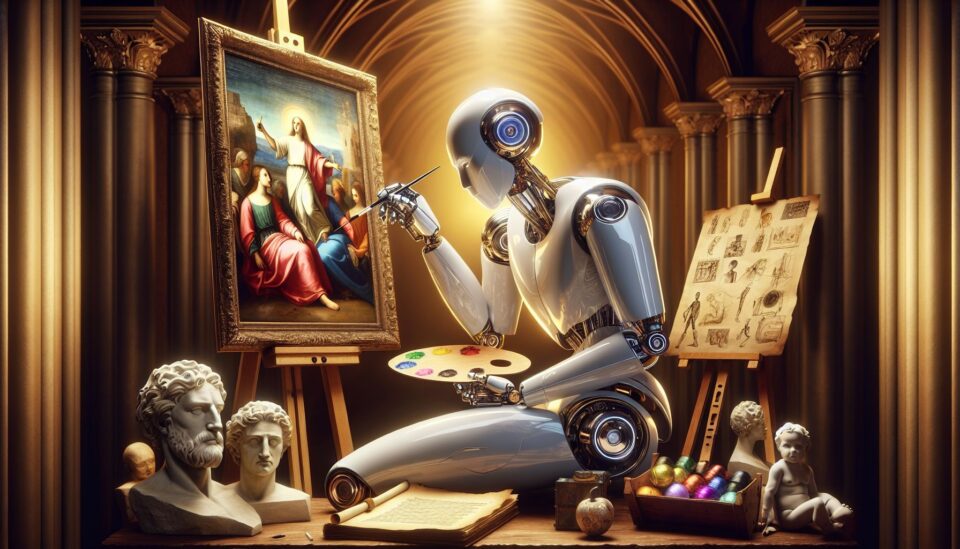
Welcome back, fellow tech enthusiasts! If you’re anything like me, you’re probably buzzing with anticipation about how Artificial Intelligence keeps changing and its ripple effects across different industries. Today, I’m diving into the fascinating intersection of AI and the creative arts – a conversation that blends our wildest tech dreams with real machine learning breakthroughs happening right now.
Setting the Stage: AI Meets the Creative Frontier
For years, creativity has been largely considered a uniquely human thing, a domain where artistry, emotion, and intellect come together to produce masterpieces in writing, art, and music. But as artificial intelligence keeps advancing, the line between human and machine creativity is getting blurry, and it’s creating an entirely new world for the arts.
When we talk about AI in creative arts, we’re talking about using algorithms and machine learning to help or even drive the creative process. Picture an AI that can generate a symphony, write poetry, create sophisticated artworks, or even write a full novel. As sci-fi as it might sound, these applications are happening right now.
The Advent of Creative AI Systems
Over the past few years, we’ve seen explosive growth in machine learning algorithms that can handle increasingly complex tasks. Among the most impressive systems is OpenAI’s GPT (Generative Pre-trained Transformer) series, which has completely changed how we generate text, engaging in complex conversations and writing articles that mimic human writing styles with surprising accuracy.
Algorithms and Artistry
The ability of AIs like GPT-3 and its successors to produce creative content isn’t just copying human work. It represents a genuine, if early, meeting point between machine learning and artistry. When asked to write a poem or generate narrative fiction, these models use massive amounts of preprocessed data to structure language like humans do, bringing technology closer to truly understanding and replicating human creativity.
DeepArt and other generative adversarial networks (GANs) have made similar leaps in visual arts. These AI platforms can take inspiration from famous art styles – say, Van Gogh’s bold strokes or Mondrian’s clean lines – and apply them to new creations, often with mesmerizing results. Artists and creatives are now using these tools to explore uncharted creative territories, pushing the boundaries of their craft and sometimes collaborating with AI like they would with human partners.
Embracing a Collaborative Future
Redefining Artistry
With the rise of AI-generated art, what we mean by “artist” is shifting. Is an artwork created by an algorithm less valuable or less authentic than one created by a human? While purists might argue against AI’s place in traditionally human-only art spaces, many contemporary creatives see it as an opportunity for collaboration rather than competition.
AI tools have become sources of inspiration, offering artists a co-creator that can spark new ideas and challenge conventional thinking. They let creators prototype faster, iterate easily, and step beyond their artistic comfort zones without ever lifting a brush or setting pen to paper.
Democratizing Creativity
Beyond reshaping creation, AI is democratizing access to the arts. Think about it: a writer with limited resources can now use AI to help draft plots or brainstorm fresh ideas. Budding musicians can collaborate with AI to arrange compositions. This technology opens doors for people who may have previously lacked the means to break into the arts scene.
Enhancing Education in the Arts
AI is also revolutionizing education in creative fields. Interactive learning experiences powered by AI can personalize curriculums for students, simulate immersive art history lessons, or provide real-time feedback to aspiring painters and poets. Hyper-personalized learning paths and AI-driven tutoring might soon become mainstream, making education more accessible and tailored than ever before.
Navigating Ethical and Philosophical Implications
The AI Authorship Debate
One of the biggest ethical questions surrounding AI and creative arts revolves around authorship. If an AI produces a piece of art or a literary masterpiece, who owns the copyright? Does credit belong to the programmer, the person who trained the AI, or the AI itself, should it one day achieve sentience? Current legal systems haven’t fully caught up with these complex issues, leading to ongoing debate and policy development.
AI’s Influence on Cultural Norms
There’s also the question of how AI’s participation in the arts might shape cultural narratives. As algorithms learn from existing datasets, they carry the potential biases of their programmers and the limitations of their training inputs, raising concerns about their influence on cultural expression. Will AI accidentally homogenize culture, or can it help amplify diverse voices and perspectives traditionally marginalized in the arts?
Conclusion: Envisioning a Techno-Utopian Future
The convergence of AI and creative arts is as exciting as it is transformative. With AI systems working as collaborators rather than mere tools, we’re glimpsing the potential for an entirely new artistic renaissance – a future where technology amplifies human creativity rather than diminishing it.
Importantly, this tech-utopian vision requires careful guidance. While AI offers incredible potential, it needs thoughtful dialogue about the ethical, cultural, and artistic consequences of its rise. Let’s continue to celebrate the innovation, explore new possibilities, and keep creativity at the heart of this remarkable revolution.
Thanks for joining me on this exploration of the AI-driven creative frontier. As always, I’d love to hear your thoughts on these developments – are you excited about a future where AI plays muse to the world’s artists, or do you see challenges on the horizon? Drop a comment below or engage with me on social media. Until next time, keep dreaming big and coding even bigger!