
Understanding the Cloud Cost Challenge
Companies around the world are learning the hard way that cloud computing’s “pay only for what you use” promise is often just marketing speak. Industry analysts expect nearly one-third of all cloud spending in 2025 will go toward unused or poorly optimized resources. We’re talking billions of dollars wasted on idle virtual machines, oversized databases, and forgotten development environments that nobody remembers spinning up.

The problem isn’t really technical complexity. It’s a complete flip in how technology costs work. Old-school IT infrastructure meant big upfront investments with predictable monthly bills. Cloud computing turns this upside down. You can spin up resources instantly, costs change daily, and suddenly everyone from engineering to finance to operations has to worry about the budget.
This mess has led to FinOps, which tries to bring some financial sanity to cloud usage. The FinOps Foundation has tripled its membership over the past two years. That’s a pretty clear sign that organizations desperately need better ways to manage cloud costs without dedicated practices and tools.
Building Your Foundation: Start With Visibility
You can’t optimize what you can’t see. Most cloud providers have native cost management tools that work well as starting points. Tools like AWS Cost Explorer give you detailed breakdowns of spending by service, region, and time period.
Start by setting up cost allocation tags across your resources. These metadata labels let you track spending by department, project, or environment. Keep it simple with three basic tags: team, environment, and project. This foundation helps you figure out which groups are burning through the most cash and understand spending patterns across development, staging, and production workloads.
Set up automated cost alerts to catch spending spikes before they blow up your budget. Configure notifications when daily or monthly costs jump above normal levels. These early warnings help teams respond quickly to runaway processes or misconfigured resources that could otherwise generate nightmare bills.
Schedule regular cost review meetings where engineering and finance teams look at spending trends together. Weekly 30-minute sessions focusing on the biggest cost drivers often reveal optimization opportunities that individual teams miss. These collaborative reviews build the cultural foundation you need for long-term cost management.
Quick Wins: Low-Risk, High-Impact Optimizations
Once you can see where your money goes, focus on optimization strategies that deliver immediate results with minimal risk. Reserved instances and savings plans are the most straightforward path to serious cost reduction. These commitment-based pricing models typically cut compute costs by 40 to 60 percent compared to on-demand pricing.
Start conservatively by analyzing your steady-state workloads over the past three to six months. Find virtual machines or database instances that run consistently without big changes in size or type. These stable workloads are perfect candidates for one-year reserved instance commitments, which offer substantial savings with manageable risk.
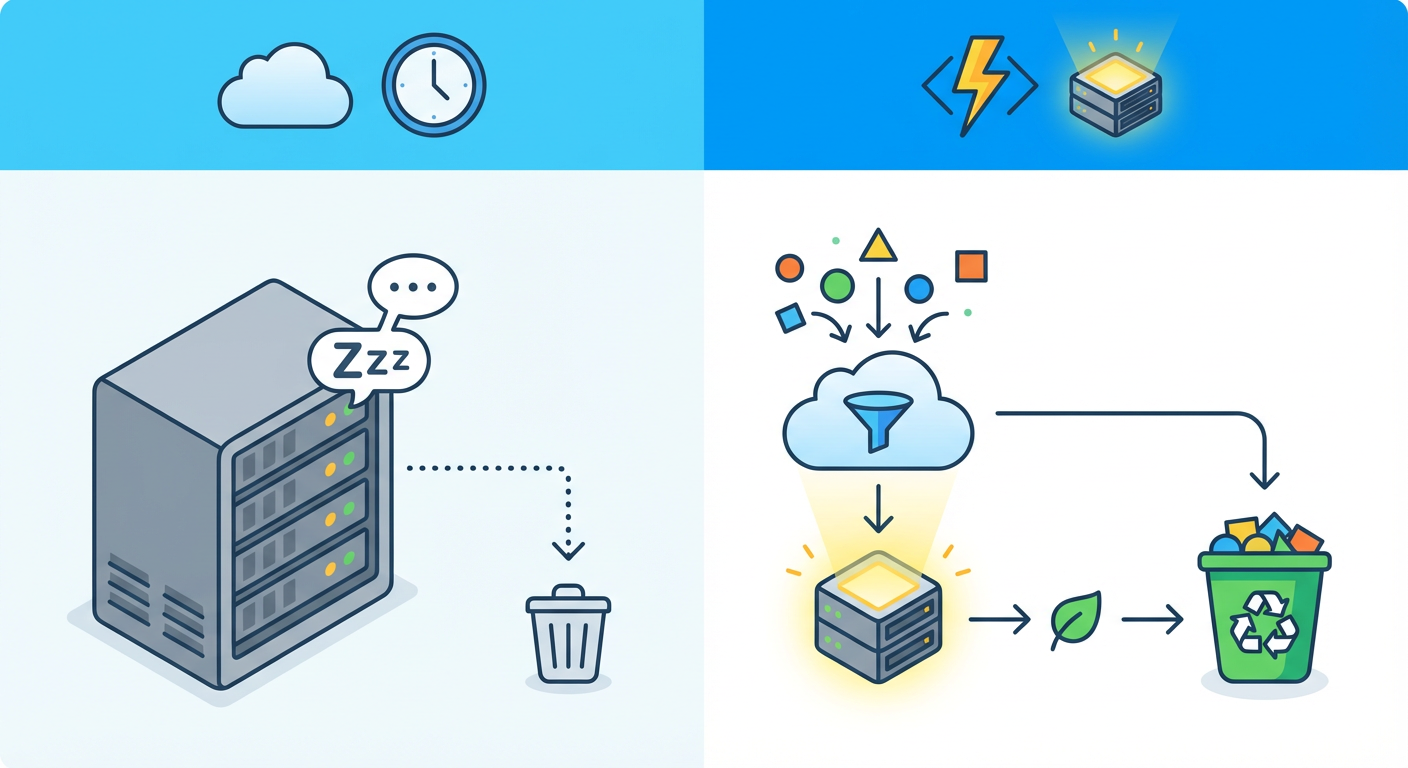
For development and testing environments, implement automated scheduling that shuts down resources during off-hours. A simple script that stops non-production instances at 7 PM and restarts them at 8 AM can cut these costs by 60 to 70 percent. Most development work happens during business hours anyway, making this optimization both effective and painless.
Right-sizing is another easy target. Many organizations provision resources based on peak capacity requirements, leaving them oversized for typical workloads. Review CPU and memory utilization metrics to find instances consistently running below 20 percent capacity. Downsizing these resources often maintains performance while cutting costs significantly.
Advanced Strategies for Growing Teams
As your FinOps practices mature, you can explore more sophisticated optimization techniques. Spot instances and preemptible compute now power most machine learning training workloads, offering savings of up to 90 percent for fault-tolerant applications. These discounted resources can be interrupted with short notice, making them suitable for batch processing, data analysis, and development workloads.
Serverless computing technologies eliminate idle costs for event-driven applications. Functions that respond to user requests or process data only consume resources during execution, making them ideal for workloads with sporadic or unpredictable usage patterns. This approach reduces waste by ensuring you pay only for actual computation time.
Multi-cloud strategies have become increasingly common as organizations try to avoid vendor lock-in and use best-of-breed services. However, managing costs across multiple cloud providers adds serious operational complexity. Consider implementing centralized cost management platforms that aggregate spending data from all cloud providers, giving you unified visibility into your total cloud investment.
Container orchestration platforms like Kubernetes enable more efficient resource utilization through intelligent workload scheduling. By packing multiple applications onto shared infrastructure and automatically scaling based on demand, these platforms can significantly improve resource efficiency compared to traditional virtual machine deployments.
Measuring Success and Building Momentum
Effective FinOps needs metrics that demonstrate progress and identify areas needing attention. Track your cloud efficiency ratio by comparing actual spending to optimized spending targets. Monitor unit economics by calculating cost per customer, transaction, or other business-relevant metrics that tie cloud spending to business outcomes.
Implement showback and chargeback mechanisms that allocate cloud costs to the teams responsible for generating them. This financial accountability encourages teams to consider cost implications when making architectural decisions. Start with simple showback reports that display costs without financial transfers, then evolve toward chargeback as your tagging and allocation capabilities mature.
Celebrate optimization wins publicly to build momentum across your organization. Share success stories about teams that reduced costs while maintaining or improving performance. These stories demonstrate that cost optimization enhances rather than hurts engineering effectiveness.
Cloud cost optimization is an ongoing process rather than a one-time project. Start with the basics of visibility and quick wins, then gradually introduce more sophisticated strategies as your team’s capabilities grow. The key is beginning with manageable steps that build confidence and demonstrate value, creating a foundation for more advanced FinOps practices over time.