The License Shock That Started Everything
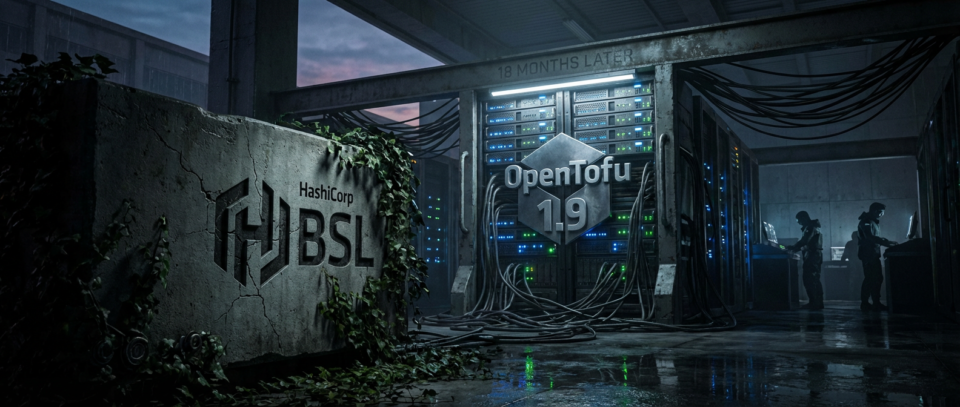
In August 2023, HashiCorp did something that still makes seasoned infrastructure engineers wince. They yanked Terraform’s license from the permissive Mozilla Public License 2.0 and slapped on the Business Source License 1.1. If you weren’t paying attention at the time, that was the moment the community collectively held its breath and asked: “Wait, can they actually do that?” They could, and they did.

What followed was textbook open-source friction. The Linux Foundation backed a fork. Contributors scattered. Management had to have uncomfortable conversations with procurement teams. For those of us who’d spent years building Terraform into production bedrock, it felt like finding out your most reliable tool came with invisible strings attached. The fork wasn’t some niche rebellion either. By the time the Linux Foundation OpenTofu project page went live, you could feel the gravitational shift.
OpenTofu 1.0 Was Just the Baseline, Not the Finish Line
When OpenTofu hit 1.0 stable in January 2024, plenty of people wrote it off as “just another fork.” Those people weren’t paying close attention. Yes, 1.0 meant feature parity with Terraform’s corresponding release. Yes, migration paths were smooth. But parity is not a strategy. It’s a starting point.
The real inflection came six months later when OpenTofu 1.8 shipped with native provider-defined functions. This wasn’t some cosmetic enhancement. This was the community delivering something Terraform users had literally begged for years, while HashiCorp kept it parked in the roadmap backlog indefinitely. Suddenly the fork wasn’t just catching up. It was pulling ahead. That matters psychologically in ways executives and boards understand: it means the fork has become the place where innovation actually happens. For engineers evaluating infrastructure tools in 2025, that’s not a minor distinction.
IBM Changed the Equation, IBM Didn’t Solve It
Then IBM acquired HashiCorp for approximately 6.4 billion dollars in mid-2024. This should have been reassuring. Established enterprise company. Deep pockets. Mature go-to-market infrastructure. Instead, it added fuel to the fire. The post-acquisition product roadmap updates landed with a thud. They didn’t address the fundamental anxiety: would HashiCorp, now an IBM property, become even more aggressive about monetizing something that had been free and open? Would the BSL expand to more products? The answers came back as eloquent silence.
From a career intelligence standpoint, this matters enormously. When your organization’s infrastructure automation engine is controlled by a vendor whose parent company has a track record of aggressive licensing, you’re now playing a different game. You’re not just managing infrastructure. You’re managing vendor risk. That’s a conversation your CTO is having with legal, and it creates real urgency around migration decisions.
The Migration Is Quietly Happening at Scale
Here’s where things get interesting for your 2025 calculus: a Spacelift survey from Q4 2024 found that 38% of organizations running Terraform were actively evaluating or had already moved to OpenTofu. Cost and license uncertainty were cited as primary drivers by 91% of respondents. Nearly four in ten shops have made a conscious choice to either jump or seriously prepare to jump.
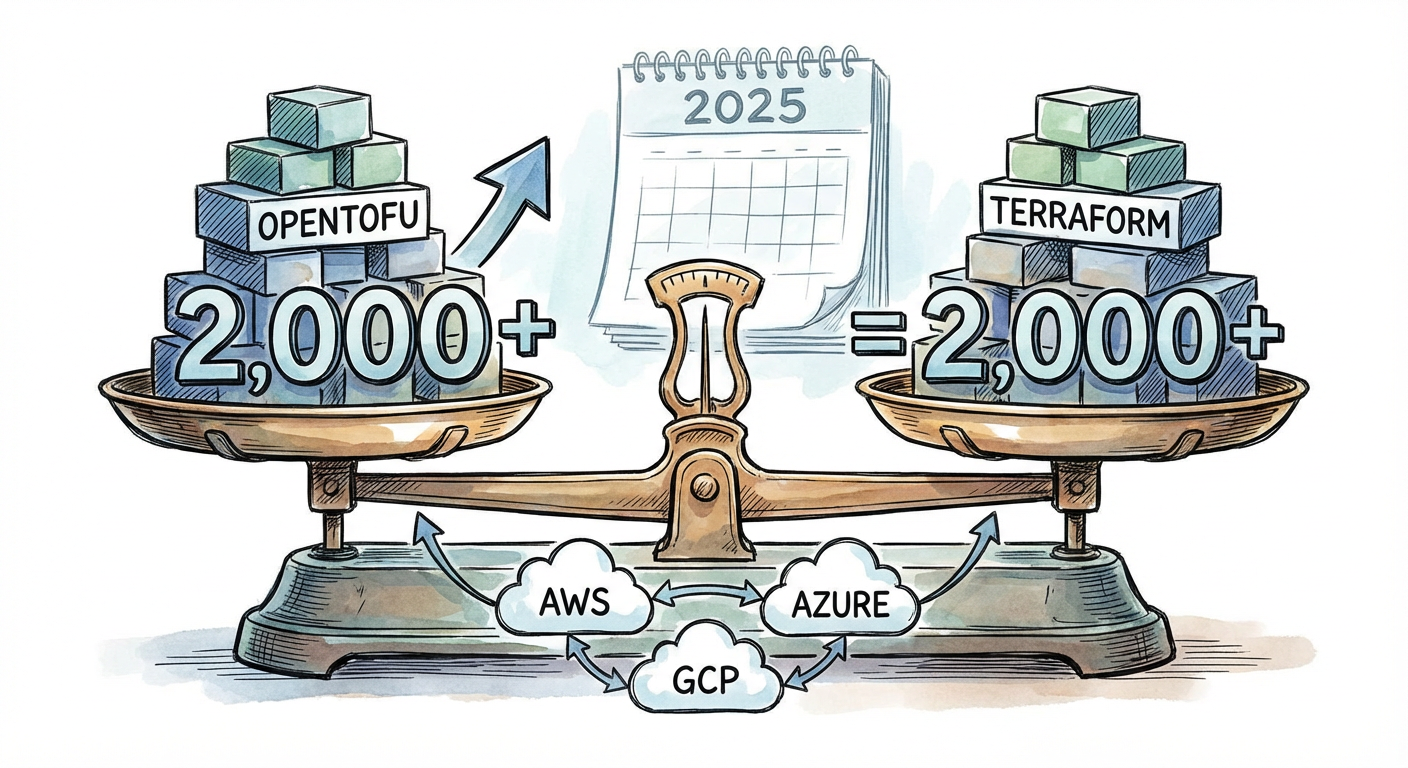
The OpenTofu registry has crossed 2,000 mirrored providers as of early 2025. That sounds like a number, but operationally it means something concrete: if you’re running AWS, GCP, and Azure infrastructure, you have functional parity with the Terraform Registry for virtually all your use cases. The ecosystem isn’t fragmented. It’s mature. The fork is no longer a gamble. It’s a legitimate alternative with real infrastructure behind it. Check the OpenTofu official documentation and changelog if you want granular details on what 1.9 adds, but the high-level story is that the project is shipping features and maintaining quality at a pace that makes platform teams take it seriously.
What This Means for Your Next Career Move
If you’re in infrastructure engineering, this inflection point matters. Organizations that migrated early to OpenTofu, or are actively planning to, tend to signal a few things: technical leadership willing to make independent tooling decisions, comfort betting on community-backed projects, and actual consideration of long-term vendor risk rather than just immediate convenience. Those are signs of mature engineering culture.
Conversely, shops that are still fully committed to Terraform because “that’s what we’ve always used” haven’t actually made a decision. They’ve just deferred one. Six months from now, your company will either be migrating, have migrated, or will be explaining to the board why migration isn’t on the roadmap. Worth understanding before you accept an offer or commit to a multi-year platform initiative.
The pragmatic move? Get hands-on with OpenTofu 1.9 in a sandbox. Build something real. Walk through the migration path for your own infrastructure. Form your own opinion instead of inheriting someone else’s. You don’t have to decide which tool your organization should standardize on. But you should understand why, 18 months after a contentious fork, the minority tool is winning migration conversations at scale. That kind of technical pattern recognition makes you the person in the room who sees around the corner. That’s what careers are actually built on.