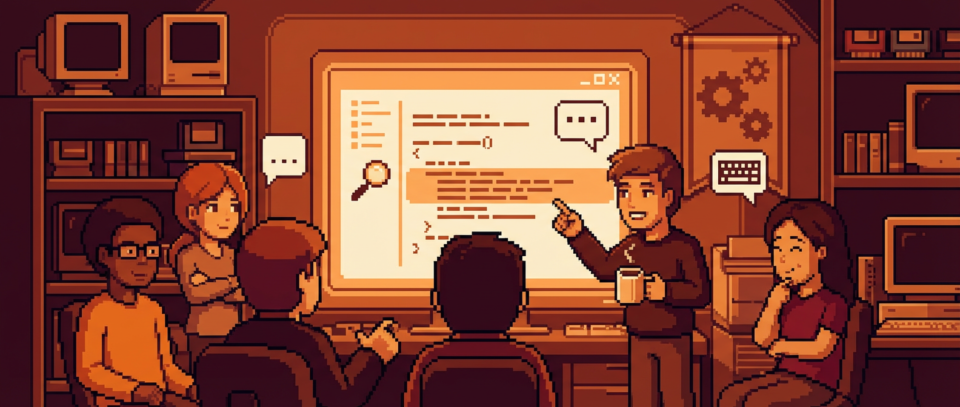
Why Your Code Review Process Actually Matters More Than Your Framework Choice
I’ve been writing code professionally for longer than some of my colleagues have been alive, and I can tell you with absolute certainty that the most expensive bugs I’ve encountered weren’t caused by choosing the wrong database or picking React over Vue. They were caused by code that looked fine in isolation but fell apart the moment it touched reality. Code reviews are your early warning system, your quality gate, and sometimes your last chance to catch that edge case that will wake you up at 2 AM six months from now.
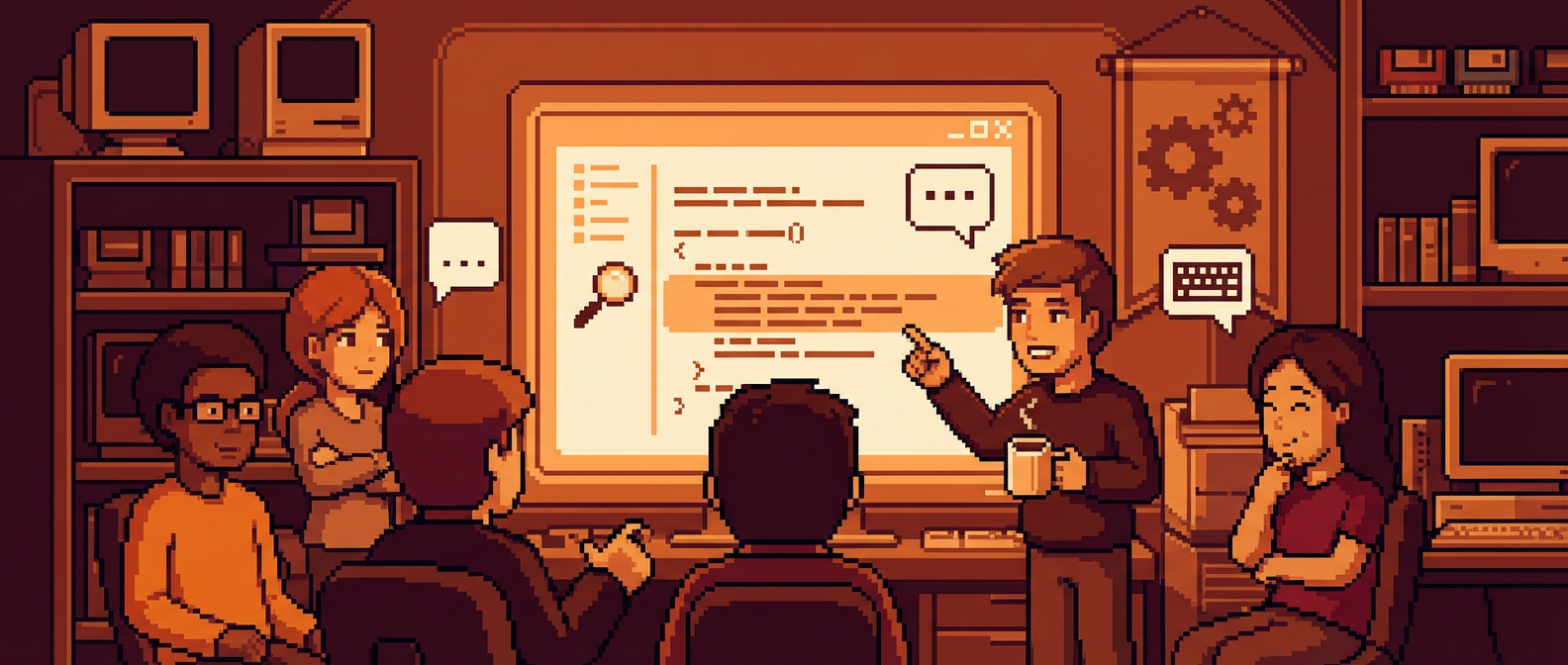
Here’s the thing about code reviews that nobody tells you upfront: they’re not really about finding typos or arguing about semicolons. They’re about building a shared understanding of your codebase and creating a culture where knowledge flows freely between team members. When done right, they’re the difference between a codebase that feels like a well-organized library and one that feels like a digital hoarder’s nightmare.
If you’re just starting to implement code reviews on your team, you’re probably wondering where to begin. You don’t need fancy tools or elaborate processes to get started. But you do need to change how people think about their code, and that’s always harder than installing a new piece of software.

Setting Up Your First Code Review Workflow Without Drowning in Process
Start simple. Seriously. I’ve watched teams spend three weeks debating the perfect code review template while shipping bugs that could have been caught by having literally anyone else look at the code for five minutes. Pick a tool you already have access to. GitHub’s pull request reviews work fine. GitLab’s merge requests work fine. Even a shared document where people paste code snippets works if that’s where you are right now.
The basic workflow should feel natural: create a branch, write your code, open a pull request, get feedback, address feedback, merge. Don’t overcomplicate it with approval matrices or mandatory checklists on day one. Focus on getting people comfortable with the idea that having their code reviewed is normal, not a judgment on their competence. I’ve seen brilliant engineers avoid code reviews because they felt like asking for help was admitting failure. That mindset will kill your adoption faster than any technical barrier.
Set clear expectations about timing. Nothing kills momentum like a pull request that sits open for a week because nobody knows they’re supposed to review it. Establish that reviews should happen within 24 hours for small changes, 48 hours for larger ones. If something is truly urgent, use your team’s communication channel to ask for immediate attention. But be honest about what constitutes urgent, because if everything is urgent, nothing is urgent.
What to Look For When You’re Staring at Someone Else’s Code
New reviewers often freeze up because they don’t know what they’re supposed to be looking for. They end up focusing on style nitpicks because those are easy to spot, while missing the architectural decisions that will cause problems later. Here’s your practical checklist: Does this code do what it claims to do? Can you understand what it’s trying to accomplish without having to trace through every line? Are there obvious edge cases that aren’t handled?
Look for the happy path bias. Most code handles the case where everything goes perfectly, but production is rarely that cooperative. What happens if the API returns null? What if the user uploads a 50MB file? What if the database connection times out? I’m not saying you need to handle every possible failure mode, but the likely ones should at least be acknowledged.
Pay attention to testing coverage, but don’t get obsessed with percentages. A single integration test that covers the main user workflow is worth more than a dozen unit tests that mock everything into irrelevance. Ask yourself: if this code broke, would the existing tests catch it? If the answer is no, that’s worth discussing.
Check for readability, but remember that readable doesn’t always mean simple. Sometimes complex logic is complex because the problem is complex. The goal is that six months from now, someone can look at this code and understand what it’s doing without having to reverse-engineer the original developer’s thought process. Comments that explain why decisions were made are infinitely more valuable than comments that explain what the code does.
Writing Feedback That Actually Helps Instead of Just Frustrating Everyone
The way you give feedback determines whether code reviews become a collaborative learning experience or a source of team friction. Lead with questions, not declarations. Instead of “This is wrong,” try “Have you considered what happens if this array is empty?” Instead of “Use a map here,” try “Would a map be more efficient for this use case?” The goal is to start a conversation, not issue commands.
Be specific about the impact of issues you raise. “This might have performance implications if the dataset is large” is more helpful than “This seems slow.” “This pattern makes it harder to test because we can’t mock the dependency” explains why you’re suggesting a change. Context helps people understand your reasoning and makes them more likely to apply similar thinking in the future.
Distinguish between must-fix issues and suggestions for improvement. Not every comment needs to block the pull request. Use language that indicates priority: “This will cause a bug” versus “This could be more elegant” versus “Consider this approach for next time.” I use prefixes like “nit:” for minor style issues and “blocker:” for things that genuinely need to be fixed before merging.
Always acknowledge good code when you see it. Positive feedback is just as important as constructive criticism. “Nice use of pattern matching here” or “This error handling is thorough” costs you nothing and helps build a culture where people want to participate in reviews rather than enduring them.
Making Code Reviews Stick When the Initial Enthusiasm Wears Off
The biggest challenge with code reviews isn’t implementing them, it’s keeping them going when deadlines get tight and people start taking shortcuts. You need to make reviews feel valuable, not like bureaucratic overhead. Track what reviews catch. Keep a running list of bugs that were prevented, performance issues that were spotted, or knowledge that was shared. Share these wins with the team regularly.
Make participation visible and celebrated. Not in a competitive way that turns reviews into a performance metric, but in a way that recognizes when people give particularly helpful feedback or catch important issues. Some of the best engineers I know are the ones who consistently leave thoughtful, constructive review comments.
Adjust your process based on what you learn. Maybe you discover that reviews work better when they’re done synchronously in a quick screen share for complex changes. Maybe you find that certain types of changes don’t need full reviews. The process should work for your team, not the other way around. Stay flexible and keep asking whether your current approach is actually helping you ship better code.
Code reviews are one of those practices that seem simple on the surface but reveal their depth as you get more experienced with them. Start with the basics, focus on building good habits, and don’t be afraid to iterate on your process as your team grows more comfortable with the practice. The investment you make in establishing a solid review culture will pay dividends in code quality, team knowledge sharing, and fewer production surprises for years to come.