The Structural Shift Nobody’s Talking About Clearly Enough
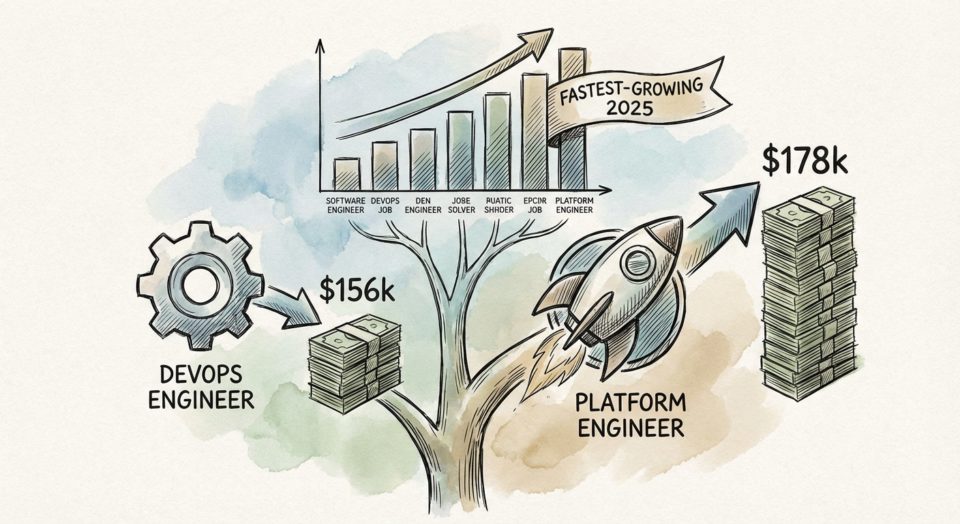
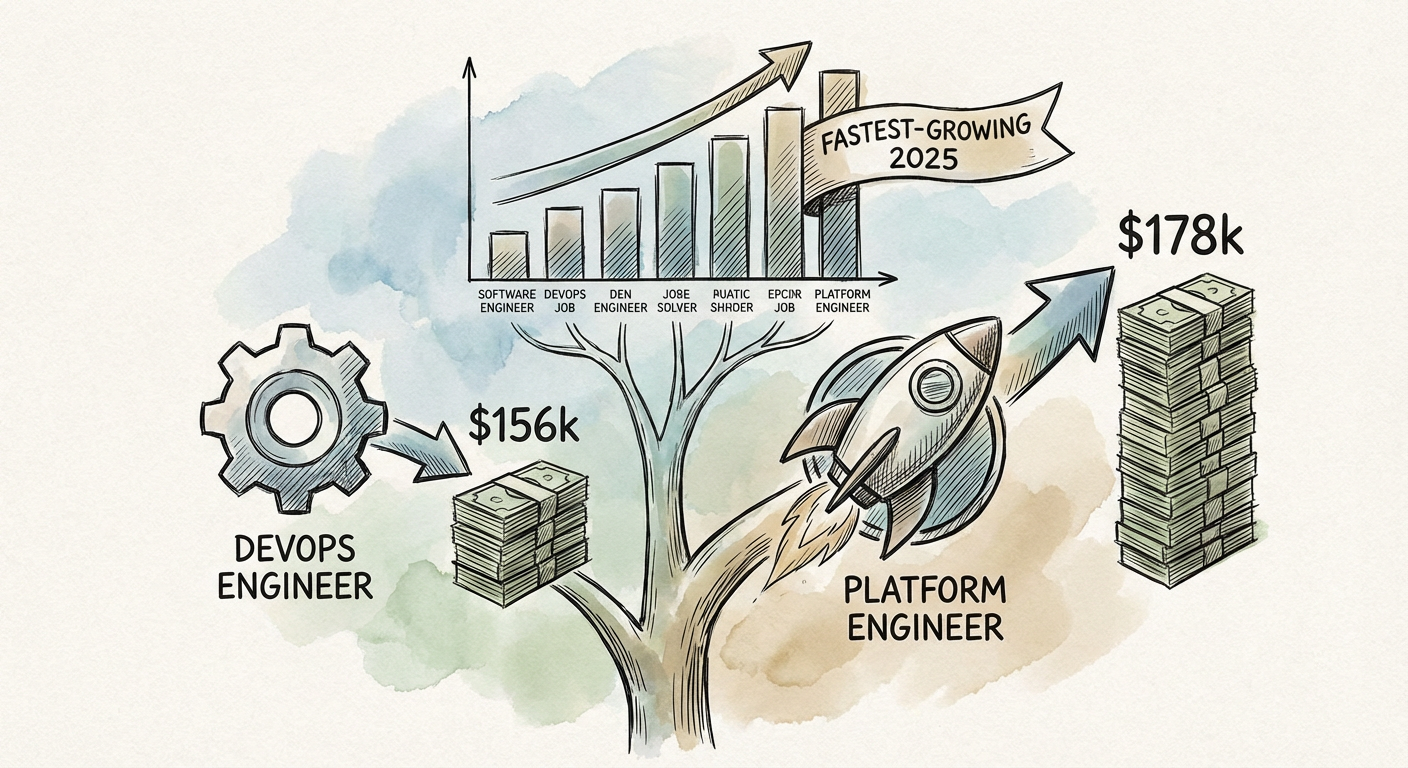
DevOps, as a unified discipline, is dead. Not in the dramatic sense where something catches fire. More like how your favorite dive bar gets renovated into a gastropub. It’s still there, but the function has fundamentally changed.
What killed it wasn’t incompetence or bad tooling. It was success. As organizations scaled past a few hundred engineers, the old model of “DevOps handles infrastructure, developers just commit” stopped working. You can’t have six DevOps people managing the deployment pipelines for two hundred developers without everyone losing their minds at 2 AM. So organizations did what made sense: they hired more people focused specifically on making developers faster. That’s platform engineering, and it’s now the structural default at serious companies.
The numbers tell a story worth sitting with. In 2023, 43% of organizations with over 500 engineers had dedicated platform teams. By the end of 2024, that number jumped to 61%, according to the CNCF Annual Survey 2025. This isn’t a trend anymore. It’s a migration. Gartner is predicting that by 2026, 80% of large organizations will have platform engineering teams. If you’re reading this in mid-2026, you already know how that forecast landed.
Backstage 2.0: From Promising Tool to Actually-Solving-Problems Tool
Spotify’s Backstage hit 30,000 GitHub stars and crossed 3,000 production adopters by the end of 2025. Those aren’t vanity metrics. Three thousand companies running something in production means you have real feedback loops. Real complaints. Real problems that actually matter.
The version 1.x era of Backstage was brilliant but frustrating. Like having a Ferrari engine you had to assemble yourself. Powerful? Absolutely. Out of the box? Not remotely. Organizations loved the concept of a unified developer portal but struggled with the security model and had no good way to let AI tools integrate meaningfully without building custom plugins that broke on every upgrade.
Backstage 2.0, announced at KubeCon NA 2025, solved the two biggest enterprise adoption blockers. First, a new plugin permissions framework that actually lets you say “this plugin can read catalog metadata but not touch secrets.” Revolutionary? No. Necessary? Absolutely. Second, native AI assistant integration. Suddenly your portal can help onboard developers, explain service dependencies, and suggest deployment strategies without maintaining a parallel custom integration. Check the Backstage project documentation and changelog for specifics on what that looks like in practice.
Here’s the thing that matters most though: these weren’t features the Backstage team invented in a vacuum. These were the top two complaints from production users. The project listened, shipped solutions, and now organizations that were on the fence have fewer reasons to build it themselves or pick something else.
What an Internal Developer Portal Actually Does (When It Works)
Let’s cut past the marketing language and talk about what a mature internal developer portal genuinely changes. A McKinsey study from late 2025 found that organizations with mature portals reduced developer onboarding time by 55% and decreased unplanned downtime incidents by 32%. Those numbers sound like they came from a sales deck, I know. But think about what they actually mean operationally.
Fifty-five percent faster onboarding means a developer who took three weeks to be productive now takes nine days. Not sexy, but scale it: at a 200-person engineering organization with 20% annual turnover, you’re talking about thirty person-weeks per year that you’re not wasting on “where’s the deployment documentation” and “how do I check if my service is actually running.” You’re also losing less institutional knowledge because it’s not locked in someone’s head.
The 32% reduction in unplanned downtime is more interesting because it suggests the portal isn’t just documentation. It’s actively preventing failures. When developers can see service dependencies clearly, understand on-call rotations, check resource quotas, and validate configurations before pushing to production, they make different decisions. They don’t make changes at 4:45 PM on Friday because the portal shows three critical services depending on what they’re about to touch. They don’t accidentally spin up expensive compute because they can see costs in real time. It’s not magic. It’s just friction in the right place.
How to Actually Start Without Becoming a Yak-Shaving Project
Here’s where I see most teams get it wrong. They look at Backstage or Humanitec or Port, see that beautiful integrated experience, and think “we need that exact thing.” Then they spend six months customizing plugins and arguing about whether their service catalog should use auto-discovery or manual registration. A year later, they’ve got 40% adoption and a growing technical debt problem.
Start smaller. Actually smaller than you think you should. Your first portal doesn’t need to be Backstage. It can be a Kubernetes dashboard plus a Slack bot that shows deployment history plus a simple Markdown wiki. Build it in two weeks. Get it in front of developers. Watch what they actually ask for, not what you think they need. The developers who are frustrated with current tools will tell you exactly where the pain is.
Then, and only then, start thinking about consolidation. Maybe you do need Backstage at that point. Maybe you need something lighter. But you’ll know because your users will tell you, and you’ll have real feedback instead of a theoretical org chart saying “platform engineers should build a portal.”
The teams that pull this off well treat the portal like a product, not a project. Someone owns it. There’s a roadmap. Users file issues. You prioritize based on impact and complexity, not on what’s theoretically correct. That sounds obvious, but most internal tools get built with the attitude of “launch and maintenance.” A good portal deserves real investment and real attention, the same way any product serving your entire organization would.
The Actual Question You Should Be Asking
Platform engineering is real. Internal developer portals solve real problems. But the question isn’t whether you need them. It’s whether you’re ready to treat developer experience as a first-class concern in your organization. That means hiring people specifically focused on making developers faster, not just keeping infrastructure running. It means measuring their success by how fast developers ship, not by how few tickets they get.
If that sounds like a cultural shift as much as a technical one, you’re paying attention. Because it is. The tools matter less than the mindset.
What’s your current bottleneck for developers? Not the obvious one, but the real one you see in standup when someone’s frustrated. Tell me in the comments, or hit me on whatever social platform you pretend to check but actually check obsessively. I want to know what’s broken in your stack, because that’s usually where the best solutions start.