The question worth asking about developer tools and the IDE wars in 2026 is not the one most coverage asks. The standard take is missing the more important signal underneath. The more useful question — the one that actually matters — is why the current situation exists at all.
What makes this different from previous cycles is that JetBrains IDEs still rule enterprise Java and Kotlin development. The methodical read of the situation is also the more accurate one once you look at what the evidence actually shows.
The Education: Setting the Terms
VS Code holds over 73 percent market share among web developers. This isn’t just another data point in the story of developer tools and the IDE wars in 2026. It’s the structural condition that makes everything else in this analysis make sense. Context like this doesn’t age quickly. The conditions that produced it have been building for years, and the convergence is what makes the current moment distinct from previous moments that looked similar from a distance.
JetBrains IDEs still dominate enterprise Java and Kotlin development. The Zed editor is gaining traction with performance-focused developers. When you look at both together, a pattern emerges that VS Code documentation has been covering from the inside: the conditions are more durable than they first appear, and the implications extend further than the immediate headline suggests.
To understand why this matters, look at what was true three years ago versus what is true now. The delta isn’t simply quantitative, it’s qualitative. The participants, the infrastructure, and the incentive structures have all shifted in ways that compound rather than cancel out. That compounding is the most important element to track.
What makes this moment worth examining carefully isn’t the novelty but the confirmation. The underlying dynamics have been visible for some time. What’s new is that they’ve reached a threshold where ignoring them requires active effort rather than simple inattention. That threshold crossing is the event, not the underlying movement that produced it.
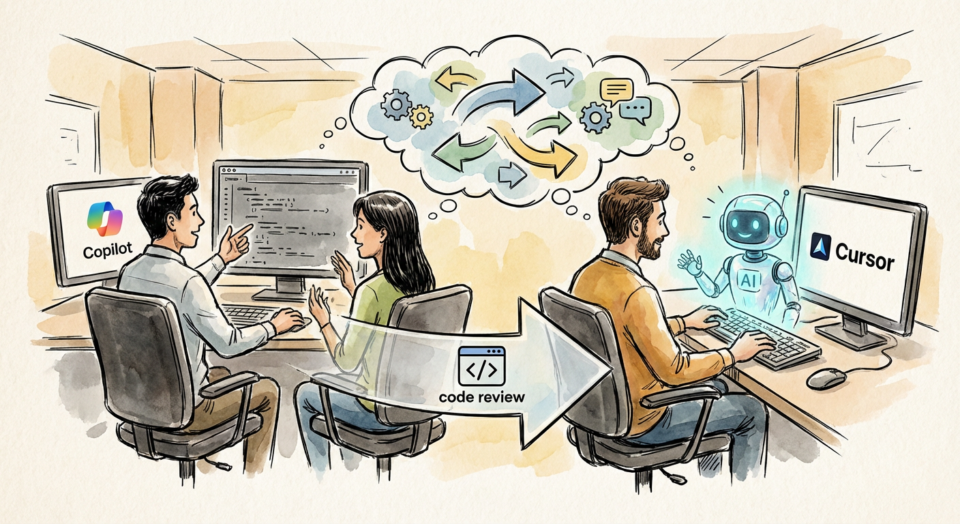
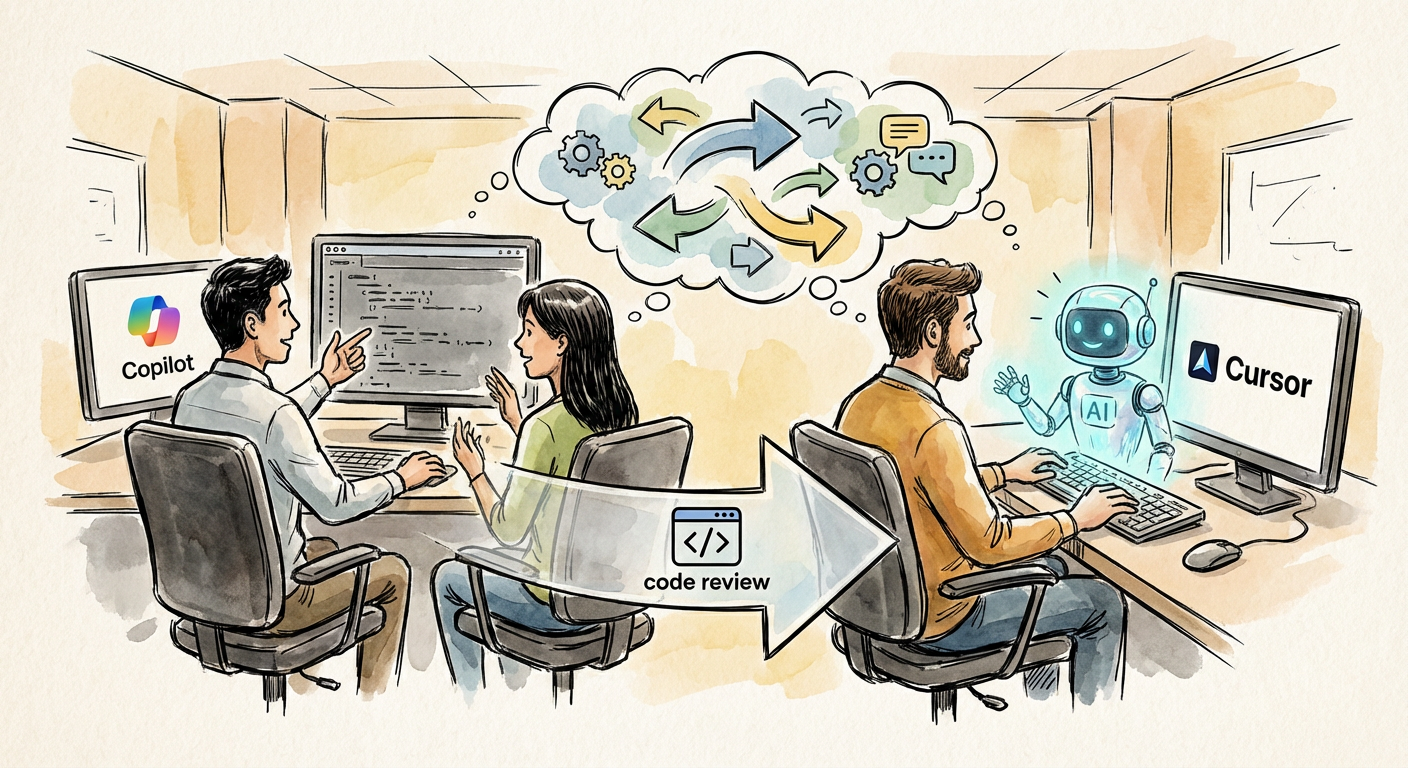
And AI pair programming in Cursor and Copilot changing code review culture is part of that same picture. These elements don’t exist in separate silos, they’re reinforcing conditions in the same structural shift.
The Deep Cut Explainer: The Analysis
AI pair programming in Cursor and Copilot changing code review culture is where the analysis gets more specific. The surface reading is accessible and not wrong, but it misses the mechanism. The mechanism is where the practical insight lives. What makes this different from previous cycles is terminal-first developers making a comeback with the Neovim plugin ecosystem exploding. Understanding this changes what you do with the information.
Consider what terminal-first developers returning to Neovim with an exploding plugin ecosystem represents in context. This isn’t a correlation that happened to appear, it’s a downstream consequence of structural factors that have been compounding. Previous readings of similar situations failed because they treated the symptom as the cause. The structural account is less satisfying as a headline but more useful as an analytical tool.
The comparison to prior cycles is instructive precisely because of where it breaks down. Similar conditions resolved differently in previous iterations because the substrate was different. What low-code platforms threatening the entry-level developer job market represents is a substrate change, the kind that alters the elasticity of the system rather than just its current value. Recognizing that distinction is what separates analysis from pattern-matching.
The skeptical counterargument deserves honest engagement: prior moments with similar surface characteristics didn’t produce the outcomes that seemed logical at the time. That history is real. What’s different now is low-code platforms threatening the entry-level developer job market, which isn’t a minor variable. It’s the infrastructure condition that previous cycles lacked. Infrastructure changes tend to stick around in ways that sentiment-driven changes don’t. JetBrains developer survey is one source tracking this dimension with the rigor it requires.
There’s also a distributional question that often goes unaddressed in coverage of developer tools and the IDE wars in 2026: who captures the value created by these shifts, and who absorbs the disruption costs? The aggregate picture can be positive while the distribution is uneven in ways that matter enormously to specific participants. Keeping that distributional lens in view is part of reading the situation clearly rather than simply optimistically.
Implications: What This Means If You Care About Internals of common tools
The implications of developer tools and the IDE wars in 2026 extend beyond the immediate context. VS Code’s 73 percent market share among web developers, combined with the structural conditions described above, creates a situation where adjacent fields, decisions, and communities get affected in ways that aren’t always visible from inside the primary story. The second-order effects are frequently more important than the first-order ones, and they’re where careful attention pays the highest returns.
The frame that matters here, and this is where the analysis departs from the mainstream coverage, is that the Zed editor gaining traction with performance-focused developers is a leading indicator rather than a lagging one. The people positioned to respond to what this signals, rather than to what it confirms, are the ones who will be less surprised by what follows.
The practical response depends heavily on your position relative to the dynamics at play. For those closest to the core of developer tools and the IDE wars in 2026, the implications are immediate and operational. For those at greater distance, the implications are strategic, a matter of understanding which adjacent pressures are building and which assumed stabilities are more fragile than they appear.
The practical question isn’t whether to engage with these dynamics but how. The answer depends on context, on what role you occupy relative to developer tools and the IDE wars in 2026 and what your actual decision horizon is. But the first step is the same regardless: accurate understanding of what’s actually happening rather than what the most available narrative says is happening.
A few concrete observations are worth separating out from the broader analysis. First: JetBrains IDEs still dominating enterprise Java and Kotlin development isn’t a temporary condition, it’s a new baseline. Second: terminal-first developers making a comeback with the Neovim plugin ecosystem exploding suggests that the adjustment period isn’t over. Third, and most important: the organizations and individuals who are treating the current moment as a new steady state rather than a transition are making a categorization error that will be costly to unwind later.
The Case Against: What the Critics Get Right
Intellectual honesty requires acknowledging the strongest counterarguments, not just the weakest ones. The case against the optimistic reading of developer tools and the IDE wars in 2026 isn’t trivial. There are structural vulnerabilities in the current picture that deserve direct engagement rather than dismissal.
The most serious objection is about sustainability. The Zed editor gaining traction with performance-focused developers can be read not as a foundation but as a ceiling, a point beyond which growth becomes self-limiting because of the very dynamics that produced it. If the current state has already incorporated most of the available supply of early-adopting participants, the remaining growth curve may be structurally shallower than the recent trajectory implies.
There’s also the policy and regulatory dimension. VS Code holding over 73 percent market share among web developers describes a condition in a relatively permissive environment. Regulatory responses to the scale implied by these numbers aren’t inevitable, but they’re not implausible either. The organizations that are planning as though the current regulatory environment is permanent are making an assumption that the history of fast-growing sectors doesn’t support.
The rebuttal to these concerns isn’t that they’re wrong, it’s that they’re already partially priced into the current state of the field. Low-code platforms threatening the entry-level developer job market reflects an environment where participants are already adapting to constraints rather than operating in an unconstrained space. The adjustment capacity of the ecosystem is higher than a purely top-down view of the risks suggests.
Looking Forward
The trajectory here is clearer than the pace. Making predictions about when specific thresholds will be crossed is hard, and anyone claiming precision about timelines should be treated with skepticism. But the direction, toward VS Code holding over 73 percent market share and continued development of the conditions described above, is supported by the evidence in a way that doesn’t depend on a single variable going right.
Low-code platforms threatening the entry-level developer job market is the variable to watch as the leading indicator. Historical patterns suggest it moves first, with broader metrics following with some lag. This doesn’t make the outcome certain, but it makes it readable, and readability is what you need for good decisions.
Three questions are worth holding as the story develops. First: are the structural conditions that enabled the current state durable, or are they cyclical? Second: who is positioned to benefit from the next phase, and does that differ materially from who benefited in the current phase? Third: what would a clean falsification of the optimistic thesis look like, and is there any evidence of that signal emerging? These questions don’t need answers today, but having asked them changes what you notice in the months ahead.
The direction here is clear even when the pace isn’t. The current moment in developer tools and the IDE wars in 2026 is one where the people who have built an accurate model of the underlying dynamics are better positioned than the people who are relying on the surface story. Building that model isn’t a quick task, but it’s a doable one, and this analysis is intended as one input into it.
What would you add or correct? The comments are for exactly this.